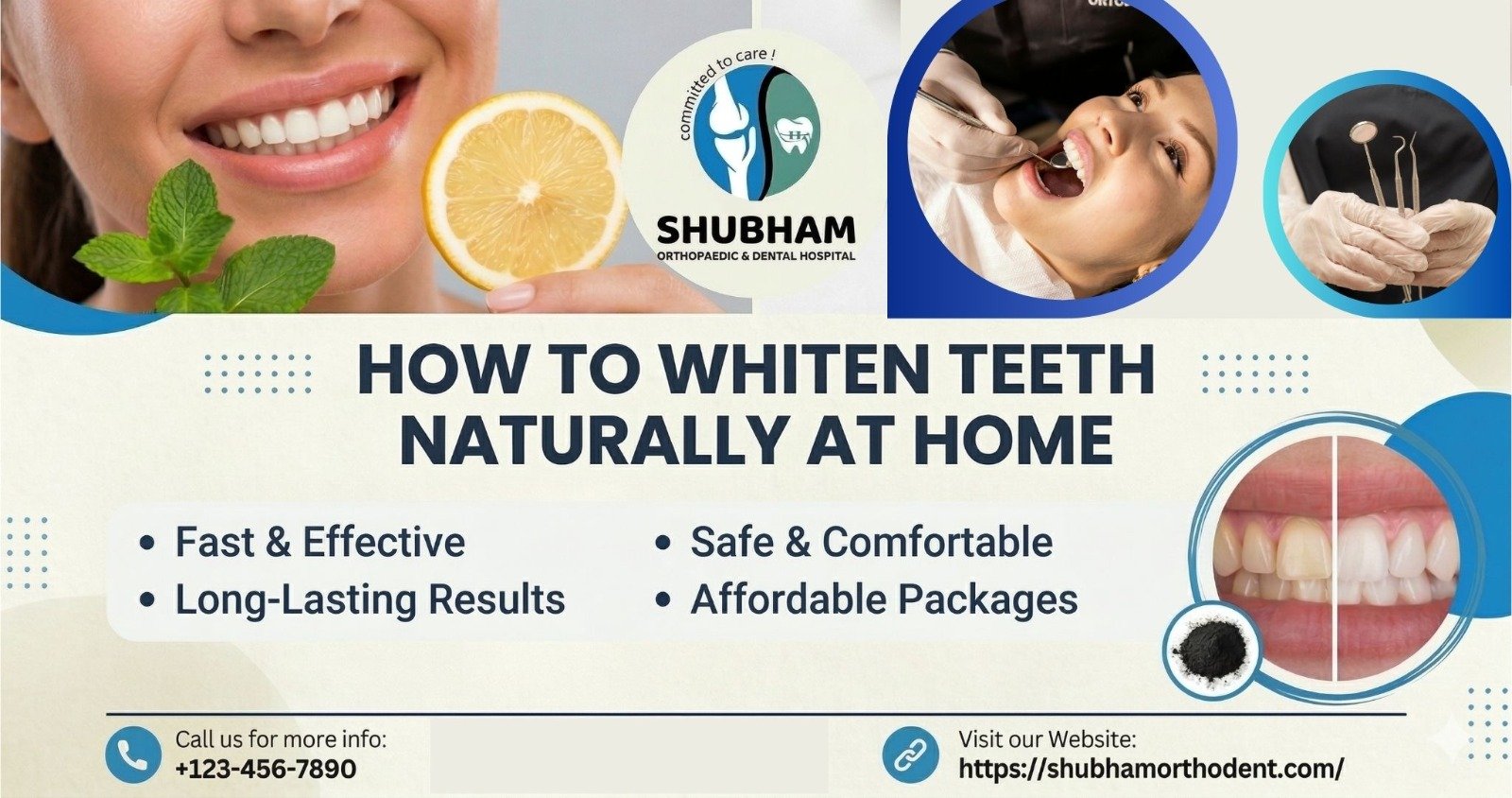
A bright, radiant smile is often considered a sign of health and confidence. However, with our modern diets and lifestyle habits, keeping teeth pearly white can be a challenge. If you are looking for ways to brighten your smile without jumping straight into chemical treatments, you have likely wondered how to whiten teeth naturally at home.
As the best dental hospital in Bhavnagar, we understand that patients want safe, effective, and natural ways to enhance their appearance. In this guide, we will break down the science of tooth stains, explore popular home remedies, and help you decide when it is time to visit the best dental surgeon in Bhavnagar for professional results.
As the best dental hospital in Bhavnagar, we understand that patients want safe, effective, and natural ways to enhance their appearance. In this guide, we will break down the science of tooth stains, explore popular home remedies, and help you decide when it is time to visit the best dental surgeon in Bhavnagar for professional results.
Why Teeth Become Yellow or Stained
Before you try to fix the color of your teeth, it is essential to understand why they changed in the first place. Tooth discoloration isn’t just about surface stains; it can often be internal.
Common Causes of Tooth Discoloration
Teeth lose their brightness for two main reasons: extrinsic stains (surface) and intrinsic stains (internal). As we age, the outer layer of enamel wears down, revealing the naturally yellowish dentin underneath.
Foods and Habits That Stain Teeth
- Beverages : Coffee, black tea, red wine, and dark sodas are the primary culprits.
- Tobacco : Both smoking and chewing tobacco introduce tar and nicotine, which create stubborn yellow and brown stains.
- Acidic Foods : Citrus fruits and vinegar can erode enamel, making it easier for pigments to latch onto the tooth.
Natural vs. Surface Stains on Teeth
Surface stains are caused by pigments sticking to the protein layer covering the enamel. Natural stains, or intrinsic discoloration, occur when the inner structure of the tooth darkens—often due to excessive fluoride exposure during childhood, certain medications (like tetracycline), or trauma to the tooth.
Natural Teeth Whitening
What Is Natural Teeth Whitening?
Natural teeth whitening involves using organic substances or mechanical friction (like baking soda) to remove surface debris and lighten the shade of the teeth without using high-concentration bleaching gels.
Is Teeth Whitening Safe at Home?
Yes, most home remedies are safe if done in moderation. However, the “natural” label doesn’t always mean harmless. Overusing acidic substances like lemon juice or abrasive powders can permanently thin your enamel, leading to tooth sensitivity and a higher risk of cavities.
Natural Remedies vs. Professional Teeth Whitening Treatment
While home remedies are excellent for maintaining brightness, they typically only remove extrinsic stains. Professional treatment at the best Dental hospital in Bhavnagar uses medical-grade oxidizing agents that penetrate deep into the enamel to break apart even the most stubborn internal stains.
Effective Teeth Whitening Home Remedies
If you want to start your whitening journey at home, here are the most effective, science-backed methods.
Baking Soda for Natural Teeth Whitening
Baking soda (sodium bicarbonate) is a mild abrasive that can scrub away surface stains. It also creates an alkaline environment in your mouth, which prevents bacteria from growing.
- How to use : Mix 1 teaspoon of baking soda with 2 teaspoons of water and brush your teeth with the paste 2–3 times a week.
Coconut Oil Pulling for Teeth Cleaning
Oil pulling is an ancient Ayurvedic practice. While it doesn’t “bleach” the teeth, the lauric acid in coconut oil removes bacteria and plaque that make teeth look yellow.
- How to use : Swish 1 tablespoon of organic coconut oil in your mouth for 15–20 minutes, then spit it out (not in the sink, as it can clog pipes!) and brush normally.
Hydrogen Peroxide for Gentle Whitening
Hydrogen peroxide is a natural bleaching agent. Most commercial whitening toothpastes contain it.
- How to use : Use a heavily diluted solution (1.5% or 3%) as a mouthwash before brushing. Never use high concentrations, as they can cause gum irritation.
Activated Charcoal for Removing Stains
Charcoal is highly porous and can bind to surface stains from coffee or wine.
- Note : Use this sparingly (once a week), as it is more abrasive than baking soda.
Teeth Whitening Tips for Maintaining a Bright Smile
Proper Brushing and Flossing Habits
The most “natural” way to keep teeth white is to prevent plaque buildup. Brush twice daily and floss once. Flossing is crucial because stains often start between the teeth, where a brush cannot reach.
Foods That Help Naturally Whiten Teeth
Certain crunchy fruits and vegetables act like natural toothbrushes :
- Strawberries : Contain malic acid, which may help remove discoloration.
- Apples and Celery :
- Dairy : Calcium and phosphorus help strengthen enamel, keeping the white outer layer thick.
Habits to Avoid That Cause Tooth Stains
- Avoid Sipping : Don’t linger over coffee or tea for hours. Drink it quickly or use a straw to bypass the front teeth.
- Rinse After Eating : If you eat something dark or acidic, rinse your mouth with plain water immediately after.
Teeth Whitening Before and After – What Results to Expect
How Long Natural Teeth Whitening Takes
Unlike chemical bleaching, which shows results in an hour, natural methods take time. You may need to practice oil pulling or baking soda brushing for 4 to 6 weeks before noticing a visible difference.
Realistic Results from Home Remedies
Home remedies can usually lighten your teeth by 1 to 2 shades. They will restore your “natural” white but generally cannot achieve the “Hollywood” bright white that professional systems offer.
Professional Teeth Whitening Treatment
When to Visit a Teeth Whitening Dentist
If you have a wedding or a job interview, or if home remedies haven’t worked after a month, it is time to consult the best dental surgeon in Bhavnagar.
Types of Professional Treatments
- In-Office Laser Whitening : Provides immediate results (up to 8 shades lighter) in a single 60-minute session.
- Custom Take-Home Kits : Your dentist provides custom-fitted trays and a professional-strength gel for safer, more effective results than over-the-counter strips.
Teeth Whitening Dentist Cost in India
Professional whitening in India is quite affordable compared to global standards, typically ranging from ₹5,000 to ₹15,000 depending on the technology used.
Is Teeth Whitening Safe? What Dentists Recommend
Possible Side Effects
The most common side effect is tooth sensitivity, especially to cold foods. This happens when the whitening agent opens the microscopic pores in the enamel.
Who Should Avoid Teeth Whitening?
- Children under 16 (pulp chambers are still enlarging).
- Pregnant or lactating women.
- People with untreated cavities or gum disease.
- Those with crowns or veneers (whitening does not change the color of porcelain).
Teeth Whitening Dentist Cost in India
Professional whitening in India is quite affordable compared to global standards, typically ranging from ₹5,000 to ₹15,000 depending on the technology used.
Teeth Whitening Treatment at Shubham Orthopaedic & Dental Hospital
At Shubham Orthopaedic & Dental Hospital, we combine the art of aesthetics with the science of dental health.
Expert Care by Dr. Margee Doshi
Under the guidance of Dr. Margee Doshi, our dental department focuses on providing long-lasting, painless whitening solutions tailored to your enamel’s strength.
Safe and Advanced Procedures
As the best dental hospital in Bhavnagar, we use advanced light-activated whitening systems that minimize sensitivity while maximizing brightness. Our sterilization protocols ensure a safe environment for every procedure.
Frequently Asked Questions About Teeth Whitening
Q1: Can yellow teeth become white again?
Yes. Most yellowing caused by food and age can be reversed through a combination of professional whitening and improved oral hygiene.
Q2: Does baking soda really whiten teeth?
It helps remove surface stains through abrasion, making teeth look whiter, but it does not change the actual color of the tooth structure.
Q3: How long does teeth whitening last?
Professional whitening can last 6 months to 2 years, depending on how much coffee, tea, or tobacco you consume.
Q4: Is natural teeth whitening effective?
It is effective for mild stains and maintenance, but for deep-set yellowing, it is usually insufficient.
Summary
Whitening your teeth naturally at home is a great way to maintain oral health and remove minor stains. Methods like oil pulling and using baking soda are safe when done correctly. However, for a transformative change and a smile that truly stands out, professional intervention is the safest and most effective route.