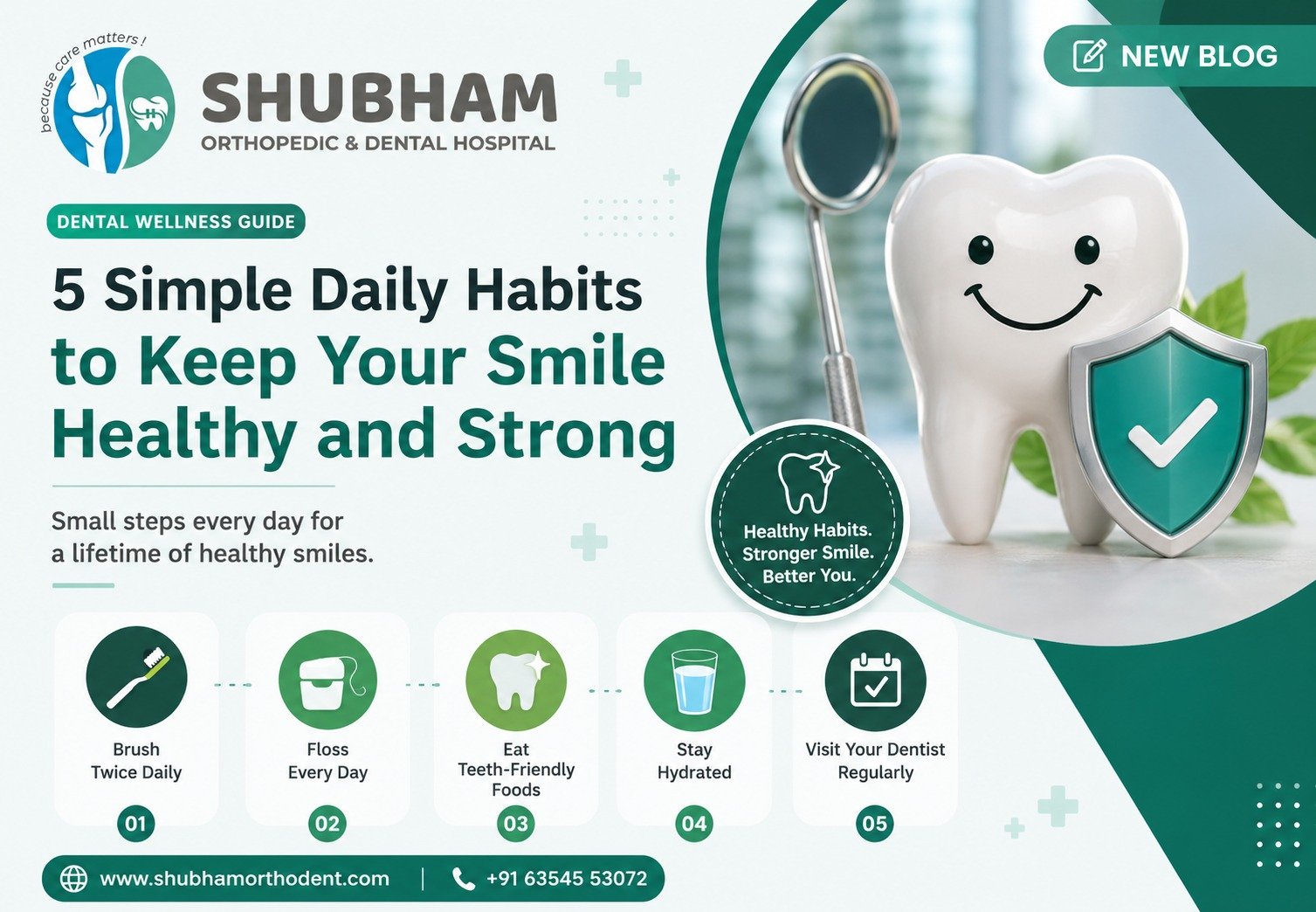
Your smile is one of the first things people notice about you. But beyond appearance, your oral health is a direct window into your overall well-being. Research links poor dental health to heart disease, diabetes complications, respiratory infections, and even adverse pregnancy outcomes.
The good news is that maintaining a genuinely healthy smile does not require expensive treatments or complicated routines. It requires five consistent daily habits done properly, every single day.
In this guide, Dr. Margee Doshi (BDS, MDS Orthodontist) at Shubham Orthopaedic and Dental Hospital, Bhavnagar, shares the complete daily routine for a healthy smile, including the one habit most patients skip entirely.
The good news is that maintaining a genuinely healthy smile does not require expensive treatments or complicated routines. It requires five consistent daily habits done properly, every single day.
In this guide, Dr. Margee Doshi (BDS, MDS Orthodontist) at Shubham Orthopaedic and Dental Hospital, Bhavnagar, shares the complete daily routine for a healthy smile, including the one habit most patients skip entirely.
Why Your Daily Habits Determine Your Smile Health
Your mouth is home to over 700 species of bacteria. Most are harmless or even beneficial. But a handful of harmful bacteria thrive on sugar and starchy foods, producing acids that attack your tooth enamel within 20 minutes of eating. Over time, this acid attack causes cavities, erodes enamel, and leads to gum disease.
No single dental treatment can compensate for poor daily habits. Fillings fix existing cavities but do not prevent new ones. Professional cleaning removes tartar, but it rebuilds within days without proper brushing and flossing. Your daily routine is the only thing that consistently protects your smile between dental visits.
“In my years of dental practice, the patients with the healthiest teeth and gums are not always the ones who spend the most on treatment. They are the ones who have made these five simple habits non-negotiable parts of their daily routine. Prevention is not a dentist’s job. It is a partnership, and the patient’s contribution happens every morning and every night.”
Dr. Margee Doshi
BDS, MDS Orthodontist · Shubham Orthopaedic and Dental Hospital, Bhavnagar
5 Daily Habits for a Healthy Smile
Here are the five habits that Dr. Margee Doshi recommends to every patient, in the order of their daily impact.
Habit 01
Brush Correctly, Twice a Day
Most people brush. Very few brush correctly. Brushing is the foundation of every healthy smile habit, but technique matters as much as frequency. Use a soft-bristle toothbrush and fluoride toothpaste. Hold the brush at a 45-degree angle to your gums and use small circular motions rather than aggressive horizontal scrubbing. Spend at least two full minutes covering every surface: outer, inner, and chewing surfaces of all teeth, plus your tongue. Brush in the morning to clear overnight bacterial buildup and at night before bed. The night brushing is actually the more important session because bacteria multiply fastest during sleep. Replace your toothbrush every 3 months or after an illness.
Habit 02
Floss Once Every Day Without Exception
This is the habit most patients skip, and it is precisely why cavities and gum disease so often begin between teeth. Your toothbrush physically cannot reach the contact surfaces between adjacent teeth. These surfaces represent approximately 40% of each tooth’s total area. Flossing once daily, ideally at night before brushing, removes the food debris and plaque that accumulates in these interproximal spaces. Use 30 to 40 cm of floss, wrap the ends around your middle fingers, and curve the floss into a C-shape around each tooth, sliding gently beneath the gum margin. If traditional floss is difficult to manage, interdental brushes or a water flosser are excellent alternatives.
Habit 03
Eat a Teeth-Friendly Diet Every Day
What you eat and drink every day either protects or attacks your smile. The bacteria in your mouth feed on fermentable carbohydrates, primarily sugar and refined starch, and produce acids as a byproduct. Every time you eat or drink something sugary, there is a 20-minute acid attack on your enamel. Frequency of sugar exposure matters as much as quantity. Sipping a cold drink over two hours causes far more damage than drinking it quickly. A teeth-friendly daily diet includes calcium-rich foods like milk, curd, and paneer to strengthen enamel. Vitamin C from amla, citrus, and guava support gum collagen. Crunchy vegetables like carrots and celery stimulate saliva flow, which is your mouth’s natural defense mechanism. Reduce sugar, avoid acidic drinks between meals, and rinse with water immediately after eating acidic foods.
Habit 04
Stay Hydrated and Rinse With Water
Water is the most underrated tool for a healthy smile. Saliva is your mouth’s primary natural defense against harmful bacteria and acid. It neutralizes mouth acids, washes away food particles, and delivers minerals that help remineralize enamel. Saliva production depends entirely on adequate hydration. When you are dehydrated, saliva production drops, your mouth becomes dry, and bacteria multiply rapidly. Drink at least 8 to 10 glasses of water throughout the day. Rinse your mouth with water after every meal, especially if brushing is not immediately possible. If you use mouthwash, use it at a different time from brushing, not immediately after, as it washes away the fluoride from your toothpaste before it has a chance to work.
Habit 05
See Your Dentist Every Six Months
The final daily habit is not something you do every day, but making and keeping this appointment every six months is a habit of mindset that belongs on this list. Professional dental check-ups catch problems when they are small. A tiny cavity that takes 15 minutes to fill today becomes a root canal or extraction next year if ignored. A professional clean removes tartar that no amount of home brushing can dislodge, particularly from below the gumline where gum disease begins silently. Dr. Margee Doshi screens for oral cancer, gum disease, enamel erosion, and orthodontic issues at every check-up, conditions that patients cannot self-diagnose. The single most cost-effective thing you can do for your long-term dental health is keep your 6-month appointment. It costs infinitely less than treating the problems that develop when you skip it.
Common Mistakes That Damage Your Healthy Smile
Understanding what to do for a healthy smile is only half the picture. These are the most common daily habits that quietly undermine even the best dental routines.
Habits that damage your smile without you realising
Brushing too hard
Aggressive horizontal brushing erodes enamel and causes gum recession. Use a light grip and let the bristles do the work. If your toothbrush bristles are splaying flat within a month, you are brushing too hard.
Rinsing after brushing
Rinsing with water immediately after brushing washes away the protective fluoride film before it can absorb into your enamel. Spit, do not rinse, after brushing at night.
Skipping night brushing
If you only brush once a day, night brushing must be that session. During sleep, saliva flow drops and bacteria multiply rapidly. Going to bed with unbrushed teeth is the single biggest controllable cavity risk.
Snacking frequently
Each snack triggers a 20-minute acid attack. Three meals with no snacking causes 60 minutes of acid exposure per day. Three meals plus four snacks causes over 140 minutes. Reduce snacking frequency dramatically.
What to Eat and Avoid for a Healthy Smile
Your diet is a daily vote for or against your dental health. Here is a practical breakdown of foods that protect versus damage your smile:
Eat more of these
- Milk, curd, paneer (calcium for enamel strength)
- Leafy greens (folic acid for gum health)
- Amla, guava, citrus (vitamin C for gum collagen)
- Carrots and celery (stimulate saliva and clean teeth)
- Nuts and seeds (phosphorus for remineralisation)
- Water and green tea (rinse and reduce bacteria)
- Eggs (vitamin D for enamel development)
Reduce these
- Cold drinks and sodas (acid erodes enamel rapidly)
- Sticky sweets and toffees (prolonged sugar contact)
- Citric fruit juices (acidic, sipped over long periods)
- Biscuits and crackers (refined starch sticks to teeth)
- Tea and coffee with sugar (staining plus acid)
- Alcohol (causes dry mouth, reduces saliva)
- Ice chewing (fractures enamel and dental restorations)
The relationship between diet and oral health is well documented in research published by the National Institutes of Health (NIH), which confirms that dietary sugar is the primary modifiable risk factor for dental caries globally and that calcium, vitamin D, and vitamin C intake are directly associated with periodontal health outcomes.
Healthy smile habits for children
All five of these healthy smile habits apply to children too, with some age-specific adaptations :
- Start brushing at tooth eruption : as soon as the first baby tooth appears, begin gentle brushing with a soft infant toothbrush and a rice-grain amount of fluoride toothpaste.
- Begin flossing when two teeth touch : as soon as adjacent teeth are in contact, flossing becomes necessary. Parents should assist until children are around 8 years old.
- First dental visit by age 1 : Dr. Margee Doshi recommends bringing children to their first dental check-up within 6 months of their first tooth appearing or by their first birthday.
- Limit juice and sugary drinks from the bottle : a common cause of early childhood cavities is prolonged contact with sugary liquids via feeding bottles, especially at bedtime.
For parents concerned about their children’s dental development, our Paediatric Dentistry page at Shubham Hospital covers everything from baby tooth care to orthodontic screening and cavity prevention for children in Bhavnagar.
Summary
- Brush twice daily for 2 minutes with a soft-bristle toothbrush and fluoride toothpaste at a 45-degree angle.
- Floss once every day; the 40% of tooth surface your brush cannot reach is where gum disease and cavities begin.
- Eat a diet rich in calcium, vitamin C, and crunchy vegetables. Reduce sugar frequency, not just quantity.
- Stay hydrated with 8 to 10 glasses of water daily. Rinse after meals. Avoid rinsing immediately after brushing.
- Visit your dentist every 6 months. Prevention costs a fraction of treatment and keeps your healthy smile lasting a lifetime.