Toothache that wakes you at night. Sensitivity that makes eating or drinking impossible. A swelling near the gum that will not go away. These are the signs that a tooth needs root canal treatment and that waiting longer will only make the situation worse.
Root canal treatment in Bhavnagar at Shubham Orthopaedic and Dental Hospital is performed by Dr. Margee Doshi (BDS, MDS) using modern rotary endodontic instruments, digital X-ray guidance, and single-sitting protocols that have made root canal treatment one of the most comfortable and predictable procedures in dentistry.
This guide covers every question patients ask: what root canal treatment is, the steps involved, how long it takes, how many sittings are needed, what the side effects are, and what life looks like after treatment.
What Is Root Canal Treatment?
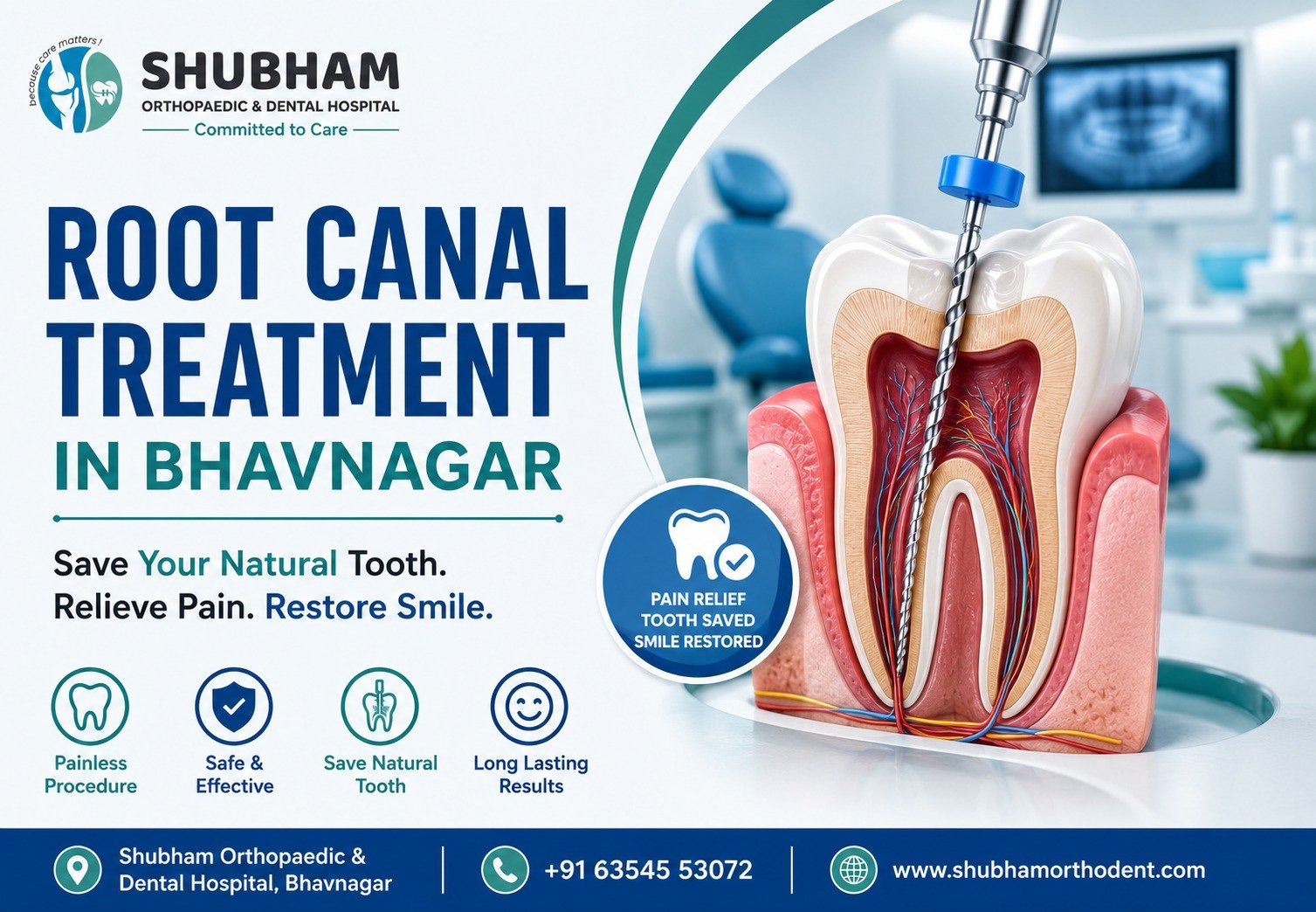
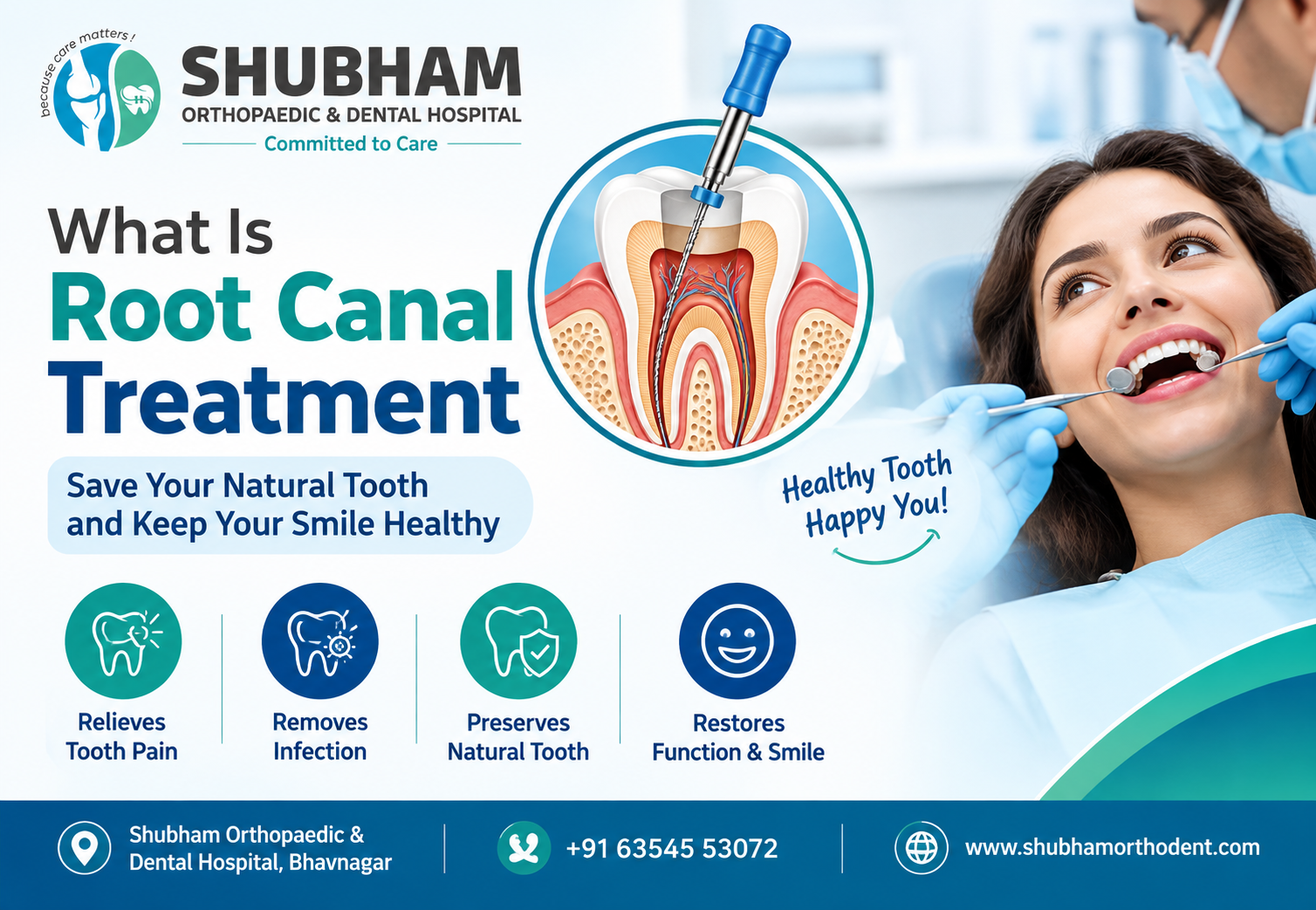
Root canal treatment, also called endodontic treatment or RCT, is a dental procedure that removes infected or damaged pulp tissue from inside a tooth, cleans and shapes the root canals, and seals the tooth to prevent re-infection. The goal is to save the natural tooth rather than extract it.
Every tooth has a pulp chamber at its centre and root canals extending down through the roots. This pulp contains nerves and blood vessels. When bacteria enter through a deep cavity, crack, or trauma, they infect the pulp, causing intense pain, abscess, and eventually tooth death.
Root canal treatment in Bhavnagar at Shubham Hospital removes the source of infection completely, relieves the pain, and restores the tooth so it can function normally for 15 or more years.
Root Canal Treatment Steps: What Happens at Each Stage
Understanding the exact root canal treatment steps removes anxiety and helps patients participate actively in their own care. Here is what Dr. Margee Doshi does at each stage of root canal treatment in Bhavnagar.
Step 1: Examination and Digital X-Ray
A clinical examination identifies signs of infection, including tenderness on biting, sensitivity to temperature, swelling, and abscess. A digital X-ray confirms infection depth, root canal number and curvature, and whether surrounding bone has been affected. This determines whether a single-sitting RCT is possible or multiple visits are needed.
Step 2: Local Anaesthesia Administration
Local anaesthesia is administered to completely numb the tooth and surrounding tissue before any instruments touch the tooth. You will feel pressure and movement during the procedure but no pain whatsoever. The anaesthesia takes full effect within 3 to 5 minutes. This is the step that makes modern root canal treatment painless.
Step 3: Rubber Dam Placement
A rubber dam is placed around the tooth to isolate it completely from saliva. This keeps the root canals clean and sterile throughout the procedure, prevents cross-contamination from mouth bacteria, and protects you from swallowing any irrigation solution or small instruments.
Step 4: Pulp Removal and Canal Cleaning
An access opening is made through the crown of the tooth. Rotary nickel-titanium instruments are used to remove the infected pulp and precisely shape the root canals from their entrance all the way to the root tip. The canals are simultaneously flushed with antiseptic irrigation solution to eliminate remaining bacteria. This is the core of the root canal treatment procedure.
Step 5: Canal Sealing with Gutta-Percha
Once the canals are clean, dry, and shaped, they are filled with gutta-percha, a biocompatible rubber-like material, combined with a sealing cement. This completely seals the canals so bacteria cannot re-enter. The access opening is then sealed with a temporary or permanent filling depending on whether additional visits are needed.
Step 6: Crown Placement (Essential Final Step)
After root canal treatment, the tooth structure is weakened because the pulp has been removed. A dental crown is placed over the tooth to protect it from fracturing under biting pressure. Without a crown, a root canal-treated tooth is highly susceptible to cracking and may fail within 1 to 2 years. Crown placement is not optional — it is an essential part of completing root canal treatment successfully.
How Long Does Root Canal Treatment Take?
Root canal treatment duration depends on the tooth type, number of root canals, and severity of infection. Here is a clear breakdown of what to expect.
Root canal treatment duration by tooth type
How Many Sittings Are Required for Root Canal Treatment?
The number of sittings required for root canal treatment is one of the most common questions patients ask. The answer depends on three clinical factors: severity of infection, complexity of the root canal anatomy, and whether a single-sitting protocol is appropriate for your case.
Number of sittings for root canal treatment explained
Ideal for patients with mild to moderate infection, straightforward canal anatomy, and no acute abscess requiring drainage. The entire procedure, including pulp removal, cleaning, shaping, and sealing is completed in one visit.
Used when moderate infection is present but not severe enough for multiple drainage visits. First sitting cleans and medicates the canals. The second sitting completes the sealing and permanent filling once infection is controlled.
Required for severe infection with active abscess, teeth with complex curved root canals, cases requiring drainage between visits, or when the patient cannot tolerate extended appointments. Extra sittings ensure complete infection control.
Painless Root Canal Treatment in Bhavnagar
The phrase “painless root canal treatment” is not a marketing claim. It is a clinical reality enabled by modern anaesthetic techniques, rotary instrumentation, and single-sitting protocols.
What makes root canal treatment painless at Shubham Hospital?
- Effective local anaesthesia: Administered in the correct amount and location to achieve complete numbness before any instrument touches the tooth. Modern anaesthetic agents work within 3 to 5 minutes and last well beyond the duration of the procedure.
- Rotary NiTi instruments: Nickel-titanium rotary files clean the root canals faster, more smoothly, and with less vibration and pressure than older stainless steel hand files.
- Apex locator technology: Electronic apex locators precisely measure the length of each root canal, eliminating the need for additional X-rays during the procedure and ensuring complete cleaning without overextension.
- Single-sitting protocol when appropriate: Completing RCT in one visit means less total procedure time, less anaesthesia administered, and no interval of discomfort between appointments.
- Post-procedure pain management: Mild soreness for 2 to 3 days is expected as the surrounding tissue heals. Prescribed anti-inflammatory medication manages this completely.
Root Canal Treatment Side Effects
Being honest about what patients can expect after root canal treatment is important. While root canal treatment is safe and well-tolerated, some temporary effects are normal.
Mild soreness (2 to 3 days): The most common side effect. The tissue surrounding the treated tooth may feel tender when biting or chewing. This is normal inflammation as the body heals and responds fully to anti-inflammatory medications.
Temporary sensitivity: The tooth and surrounding area may feel different for a few days. True sensitivity to temperature should resolve as healing occurs.
Swollen gum tissue: Mild swelling around the treated area can occur in the first 24 to 48 hours, particularly for teeth that had an active abscess before treatment. Applying a cold pack to the cheek for 20 minutes at a time helps reduce this.
Temporary jaw stiffness: Holding your mouth open for 60 to 90 minutes can cause minor jaw muscle soreness. This is unrelated to the tooth itself and resolves within 1 to 2 days.
Numbness lasting several hours: Local anaesthesia continues to work for 2 to 4 hours after the procedure. Avoid eating on the treated side until full sensation returns.
Research published by the
National Institutes of Health (NIH) confirms that post-operative pain following contemporary root canal treatment is mild to moderate in most patients and resolves within 48 hours in the majority of cases, with less than 3% of patients experiencing severe post-operative pain requiring intervention beyond prescribed medication.
Temporary sensitivity: The tooth and surrounding area may feel different for a few days. True sensitivity to temperature should resolve as healing occurs.
Benefits of Root Canal Treatment
Many patients ask whether extraction is a simpler alternative to root canal treatment. For most teeth, root canal treatment is the significantly better long-term choice for the following reasons.
A natural tooth is always superior to any replacement. Root canal treatment preserves your original tooth, including its natural root, bone support, and biting sensation.
Eliminates Pain Permanently
The infected pulp causing the pain is completely removed. Most patients experience immediate relief from the intense toothache that brought them to the clinic.
Prevents Bone Loss
When a tooth is extracted, the jawbone in that area begins to resorb within months. Root canal treatment keeps the tooth root in place, preserving the surrounding bone structure.
More Cost-Effective Long-Term
An extraction followed by an implant or bridge costs significantly more than root canal treatment plus a crown. Saving the natural tooth is always the most economical long-term option.
Stops Infection from Spreading
Stops Infection from Spreading
Maintains Natural Smile
With a well-matched crown placed after RCT, no one can tell the tooth has been treated. Your smile, speech, and bite remain completely natural.
Summary: Root Canal Treatment in Bhavnagar
Everything covered in this guide at a glance.
Root canal treatment removes infected pulp, cleans root canals, and seals the tooth to save it from extraction.
The procedure is completely painless under local anaesthesia. Modern patients describe it as comfortable as a filling.
Root canal treatment takes 1 to 3 sittings of 45 to 90 minutes each depending on tooth type and infection severity.
A single-sitting RCT is available for suitable cases at Shubham Hospital, completing the entire procedure in one visit.
Normal side effects include mild soreness and sensitivity for 2 to 3 days, managed with prescribed medication.
After RCT, eat soft foods, take prescribed medication, and attend your crown appointment without delay.
Root canal treatment benefits include saving the natural tooth, eliminating pain, preventing bone loss, and stopping infection spread.
RCT cost in Bhavnagar ranges from Rs. 2,500 to Rs. 8,000 per tooth. Contact Shubham Hospital for an exact quote.